Milan's Paolo Maldini prioritized Charles De Ketelaere over Paulo Dybala, citing strategic alignment over ease of acquisition during transfer talks.
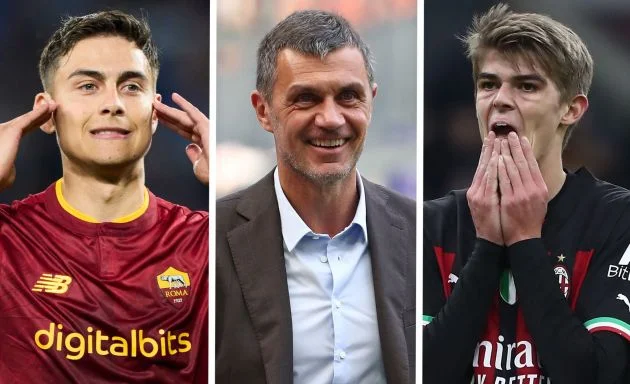
Recent remarks from Paolo Maldini regarding AC Milan's recruitment strategy have ignited discussions about player choices during the transfer window.
Strategic Reflection on Recruitment Choices
In a recent interview, Paolo Maldini, AC Milan's iconic director of football, shed light on the club's recruitment strategy. His statements came shortly after a pivotal match against Inter Milan, highlighting a significant moment not just in the season, but also in the ongoing dialogue around the club's future. When discussing potential signings, Maldini’s comments reveal a level of introspection about what types of players align with Milan's long-term vision and philosophy.
He emphasized that while the idea of signing big-name players like Paulo Dybala might seem tempting, such moves aren't always compatible with the greater goals of the club. Dybala, being a proven performer, would have been a low-hanging fruit in terms of acquisition. “It would have been much easier and much cheaper for us to go to someone like Dybala, but would it have been right for our project and shared by the ownership? No,” Maldini said. This raises important questions about how a club like AC Milan defines success beyond immediate performance metrics.
Internal Dynamics and Decision-Making
The situation doesn't just spotlight Maldini's vision; it also highlights the internal dynamics at the club, particularly concerning the influence of new CEO Giorgio Furlani. Furlani is reportedly an advocate for bold signings, viewing Dybala as a strategic option to enhance Milan's attacking capabilities. Yet, Maldini’s resistance suggests a clash of philosophies that could impact future recruitment strategies. It's a nuanced battle between short-term gains and long-term objectives. How this tension plays out could define Milan's next several seasons.
While modern football often glorifies instant success, it seems Maldini is taking a stand against that trend. His inclination toward players who fit within a specific project rather than merely star players reflects a deeper understanding of sustainable growth in football. If you're working in this space, you know that signing a high-profile player doesn't always guarantee success; sometimes, it can upset team chemistry and culture.
Performance Comparisons and Implications
This discussion gains even more context when you compare the current performances of Dybala and the player Milan opted for: Belgian forward Charles De Ketelaere. The contract negotiations for De Ketelaere were prolonged, ultimately resulting in a reported €35 million deal. However, the statistics speak volumes. Dybala has tallied 16 goals and 8 assists in 36 appearances this season. In contrast, De Ketelaere hasn't found the back of the net yet and has only managed one assist in 38 outings. This stark contrast puts Maldini’s decision under scrutiny.
That said, evaluating a player’s worth isn’t just about immediate goals and assists. The underlying metrics, such as expected goals (xG), positioning, and teamwork dynamics, also play a role in understanding a player’s impact. De Ketelaere is young and could develop into a vital component of Milan’s future framework, a fact that some analysts argue adds value to his acquisition despite his current lack of output. Nonetheless, this is the part most people overlook; patience is often a virtue in player development, but expectations are sky-high, especially for a club with Milan's storied past.
The Balancing Act of Management
This situation encapsulates the ongoing balancing act that AC Milan's management faces. With a rich history laden with both triumphs and tribulations, the current management must tread carefully as they make moves that resonate with both the fans and the broader football community. The choice to back De Ketelaere over a seasoned player like Dybala isn't just a gamble on talent; it reflects a broader strategy that prioritizes developmental potential over immediate returns.
The management's approach appears deliberate, yet it invites skepticism. Fandom often equates immediate goals with success. If Milan's leadership remains committed to its vision—prioritizing future growth over glitzy, short-term signings—it might set a precedent. This could either lead to frustration among supporters expecting swift results or ultimately build a more resilient and cohesive team. The stakes are high.
Future Outlook and Broader Implications
As we assess Milan's path forward, the implications of this recruitment strategy extend beyond mere on-field performance. The approach sets a tone about how clubs can adapt in a rapidly changing football environment, one where financial pressures can tempt even the most stalwart managers to chase immediate results. If Milan continues to prioritize a project-oriented philosophy, it could influence how other clubs approach their own strategies in the transfer market.
Moreover, this mentality could be pivotal in attracting talent who are committed to being part of a long-term vision, rather than just chasing the most lucrative contracts. What this means for you, especially if you're a follower of football economics, is that we might witness a shift toward fostering club loyalty and player development over flashy signings. The outcome will take time to manifest, but the current decisions are laying the groundwork for a potentially different football club ethos.
Discussion
Sign in to join the discussion.