Pacho reached the loose ball before López could score, taking an accidental kick to the head as PSG held Barcelona at bay.
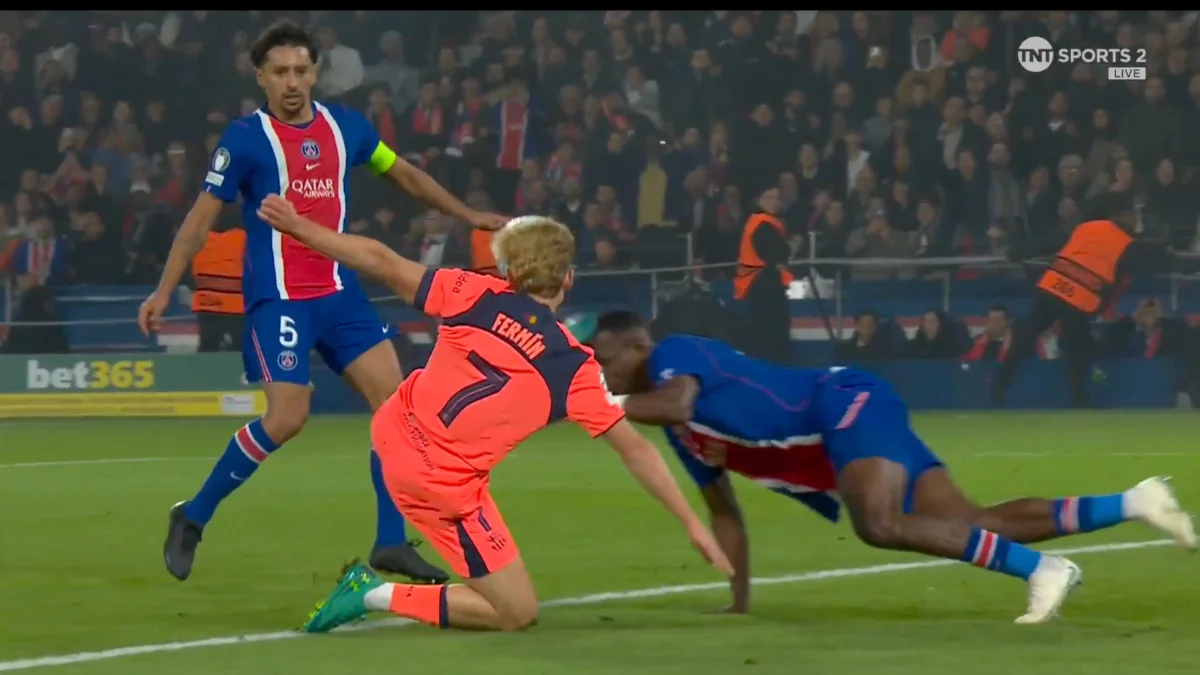
A brave clearance keeps Barcelona alive
Willian Pacho’s intervention stopped Barcelona’s best chance soon after PSG took the lead, but the defender paid for it with an accidental kick to the head. The moment showed Barcelona could still threaten on the break despite PSG’s control of the match.
The sequence captured the tension between the two teams’ approaches. PSG had been the more assertive side, controlling territory and forcing Barcelona to defend for long stretches, yet one direct pass was enough to expose space behind the home defence. That contrast matters: a team can dominate possession and still remain vulnerable if its defensive line is caught turning toward its own goal.
Barcelona didn’t need a long spell of pressure to create the opening. The visitors needed timing, speed and a pass that could bypass the first line of pressure. They got all three, although the final touch didn’t match the quality of the move.
If you enjoy CaughtOffside coverage and want to see more of it, add us as a preferred source on Google to make us a favourite and see more of our content.
How the chance developed
At the Parc des Princes, PSG had made the stronger start and moved ahead through Désiré Doué. Barcelona’s response came when a precise through ball sent winger Fermín López behind the defence.
The pass was the key moment. Rather than trying to build slowly through a crowded midfield, Barcelona found López in the channel between the defenders and the goalkeeper, giving him a clear run at goal. Against a high defensive line, that kind of movement can turn a seemingly controlled match into an emergency in a matter of seconds.
López’s run also forced PSG’s defenders to retreat toward their own goal, which reduced the time available for them to organise a second action. Matvey Safonov came off his line and blocked López’s attempted chip, making the initial save but not fully ending the danger. The loose ball created a race between the attacker looking for a rebound and Pacho trying to protect the goal.
Matvey Safonov blocked López’s attempted chip, leaving the ball loose. Pacho got there first; López’s follow-up struck the defender in the head as he tried to clear.
That clearance was less about style than survival. Pacho had to attack the ball before López could make a clean connection, and the defender’s decision prevented the forward from finishing into an exposed goal. The contact was accidental, but it was also a direct consequence of Pacho putting his body into a dangerous area at the last possible moment.
The incident is shown in the clip below:
Willian Pacho left it all on the line to deny Fermín López, getting accidentally kicked on the head ?
? Stream on TNT Sports & HBO Max: https://t.co/fRCRh6tXYB pic.twitter.com/r6Lre52oFc
— Football on TNT Sports (@footballontnt) October 20, 2026
[Footage from TNT Sport]
Pacho returns after treatment
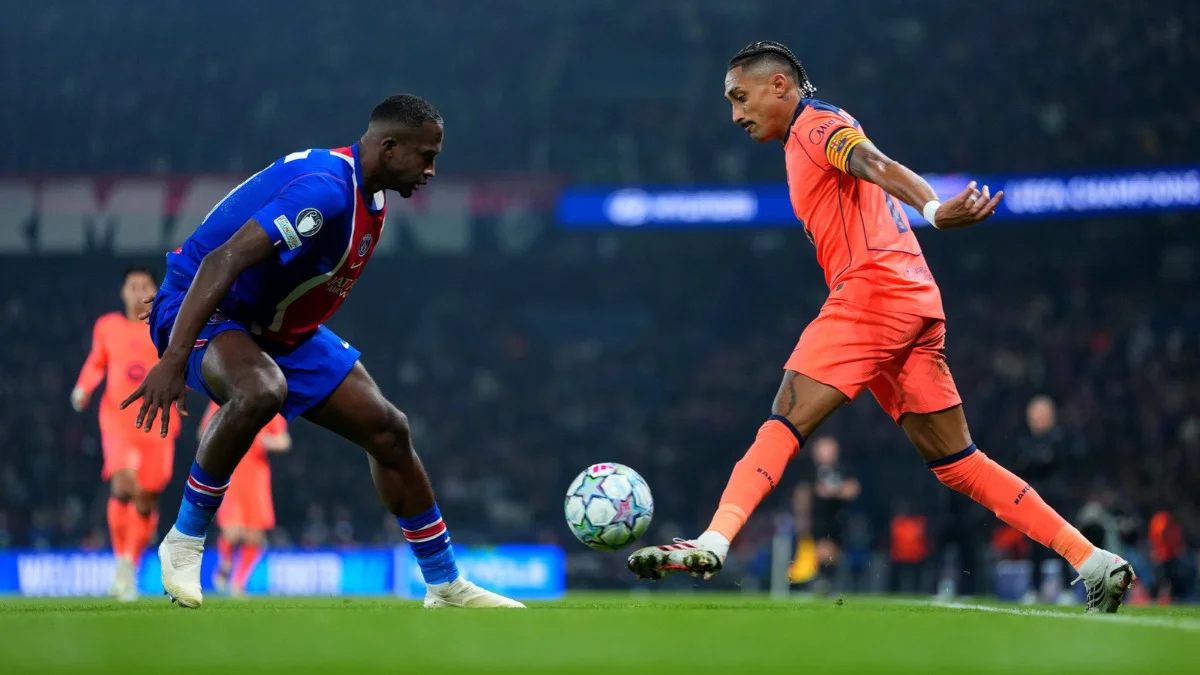
Pacho received treatment and was able to carry on, with half-time offering a chance to assess how he felt. The knock looked painful enough to leave a mark the next day.
His return reduced the immediate concern for PSG, but a head impact can change the tone of a match even when a player appears ready to continue. Defenders often have to make rapid decisions in crowded penalty areas, and any hesitation can turn a loose ball into a goal. Pacho’s willingness to challenge was valuable here, though the incident also showed the physical cost of defending a lead against fast attackers.
The timing was significant. PSG had just taken the advantage through Doué, and Barcelona’s response arrived before the hosts could fully settle into the comfort of protecting that lead. A side that’s trying to control a game after scoring still has to manage the space behind its defenders, especially when the opponent has runners who can attack it immediately.
Barcelona’s route back into the match
PSG had the advantage after Doué’s goal, but Barcelona’s chance underlined that the visitors remained a threat despite being slightly depleted. The pass into López and his run were excellent; his finish was the part that fell short.
That assessment is fair, but it shouldn’t obscure the quality of the chance. López had already done the difficult work by getting beyond the defensive line, and Safonov’s intervention meant the forward had little time to react to the rebound. In situations like this, the difference between an equaliser and a missed opportunity can be no more than one touch.
Barcelona can still test PSG’s high defensive line on the counter, with López and Anthony Gordon among the players capable of making those runs. PSG’s lead gives them control, but that opening suggests the visitors have a route back into the contest.
For Barcelona, the lesson is fairly direct: the counterattack is available, but it has to be repeated with better execution. López’s movement can stretch the defence, while Gordon’s pace gives the visitors another way to attack open space. If the first pass arrives late, though, PSG’s defenders will have more time to recover and the opportunity will disappear.
PSG won’t necessarily abandon its aggressive defensive shape because of one scare. That would surrender one of the benefits of controlling territory. But the hosts may have to judge their positioning more carefully when Barcelona’s forwards remain high and ready to run.
Why the moment matters
This is more significant than it looks. The clearance wasn’t merely a highlight-reel act of bravery; it was evidence that PSG’s control had limits. Barcelona had been pushed back, yet one accurate ball changed the geometry of the attack and left the goalkeeper facing a one-on-one situation.
For PSG, the incident reinforces a familiar tactical warning: possession and territorial pressure don’t automatically protect a lead. The defensive line must still deal with the first pass, the runner and the rebound. Miss one of those tasks and the opponent can create danger without needing sustained pressure.
For Barcelona, the opening should encourage rather than flatter them. The visitors found a weakness, but they didn’t finish the move, and Pacho’s recovery prevented the chance from becoming a goal. That’s the gap between having a viable plan and executing it well enough to change the score.
And this is the part most people overlook: the defender’s recovery affected more than one attack. By reaching the loose ball first, Pacho stopped López from taking a clean second touch and allowed PSG to reset. Small defensive actions often decide whether a counterattack becomes a memorable goal or a brief scare.
If you’re working in this space, the sequence offers a useful reminder that match control is rarely absolute. PSG may have looked in charge, but Barcelona’s ability to attack quickly remained intact. One more well-timed run could test the same defensive structure again.
Barcelona’s next challenge is clear. The team must keep finding those passes while avoiding the temptation to force every attack immediately. PSG, meanwhile, has to protect the lead without giving up the open channels that López and Gordon are prepared to exploit.
A painful clearance, a missed chip and a goalkeeper’s block all came together in one brief passage. The scoreline gave PSG authority, but the chance gave Barcelona evidence that the contest wasn’t closed. Still dangerous.
The post (Video): PSG star’s brave clearance saves a goal but earns him a boot to the head appeared first on CaughtOffside.
Discussion
Sign in to join the discussion.