Neto scored twice in Chelsea’s 2-0 win, while Palmer and João Pedro objected when Colwill put the ball out for an injured Everton player.
Pedro Neto’s two goals and Chelsea’s first Premier League clean sheet since January gave the 2-0 win at Everton a significance beyond the result. It was a display of attacking threat, but also one of defensive resolve: Chelsea scored twice and kept their opponent out. That combination offers a more useful measure of a team’s progress than a lively performance in attack alone, though one match can’t establish a new standard by itself.
The Portugal international, thriving at right wing-back this season, was the match-winner at Hill Dickinson Stadium. Manager Xabi Alonso said Neto is a threat to any full-back—a view his performances down the right are making easier to support. A player in that position has to contribute across the pitch, and Neto’s goals made his attacking influence impossible to miss. His display also gives Chelsea a practical example of how a wide player can shape a match while operating from a deeper starting role.
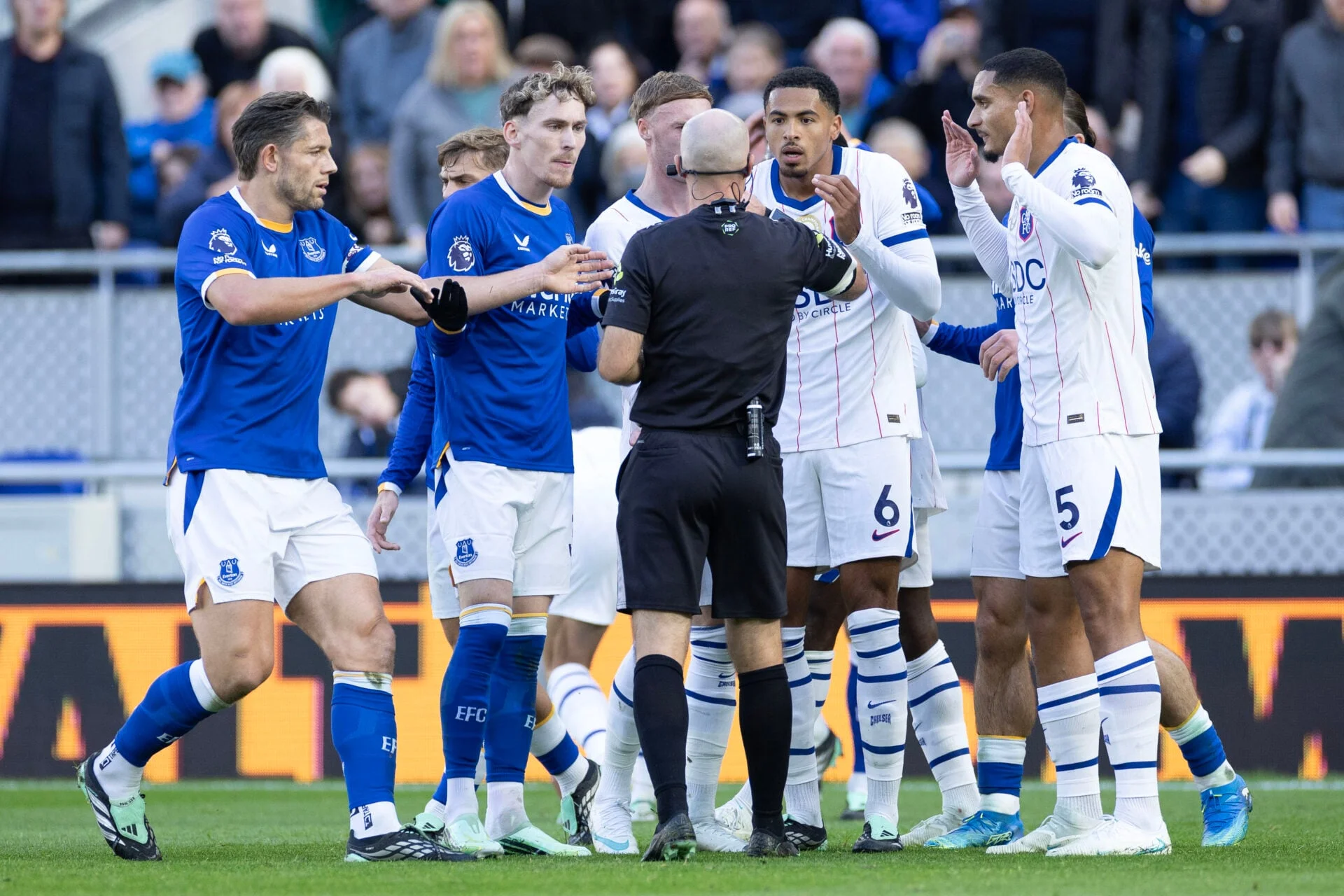
But another moment drew attention. When Everton’s Thierno Barry went down and needed treatment, Levi Colwill kicked the ball out of play. According to Daily Mail journalist Kieran Gill, Cole Palmer and João Pedro were unhappy with their teammate and made their feelings clear. The episode was brief, but it exposed a tension familiar to competitive teams: players must decide when an opponent’s welfare calls for a pause and when stopping play gives up an opportunity to press their advantage.
A show of competitive edge
Playing on might have invited criticism of Chelsea’s sportsmanship. Still, Palmer and Pedro’s frustration suggested they wanted the team to keep its focus on winning. Their reaction doesn’t settle whether Colwill made the right call; it shows that, in the moment, some teammates thought the priority should have been to continue. Those are different questions, and the distinction matters when a flashpoint is used to make a wider claim about a team’s character.
Chelsea have sometimes looked too accommodating in recent years; at Everton, there were hints of a harder edge associated with the side under José Mourinho. That comparison is an impression, not proof that the club has recovered a former identity. A sharper competitive instinct can help a side protect a lead or sustain pressure, but it has to sit alongside sound judgement. One reaction during an injury stoppage can’t tell us whether Chelsea have developed that balance.
Here’s the thing: a team’s edge is measured over more than one disputed decision. It appears in how players respond when the match becomes difficult, how they defend after taking the lead, and whether they maintain concentration when the result is within reach. Chelsea’s win offers some evidence on those fronts, especially in the clean sheet. The players’ frustration offers a smaller, less conclusive clue.
That impression also came from Chelsea’s work without the ball. The team protected its defence well and shut out an opponent in the league for the first time since January. A clean sheet can reflect several things working together: midfield pressure, defensive positioning, communication, and the goalkeeper’s contribution. The available account points to a collective effort, though it doesn’t provide enough detail to assign credit for particular moments or claim that the underlying problems are solved. A useful step. A finished answer, no.
Caicedo anchors the midfield
Moises Caicedo and Jordan Henderson started together for only the second time this season, and both performed well. Since returning from injury, Caicedo has looked increasingly commanding. Morgan Rogers called him a “general” after the match—a fitting description of his role in a clean sheet that gives Chelsea a defensive standard to build on. The pairing’s limited time together makes it premature to treat this match as evidence of a settled midfield partnership, but their performance suggests the combination can offer a platform for the rest of the side.
Midfield control often determines whether a defence faces repeated attacks or gets time to reset. A player who can read danger and help organize those around him can influence a clean sheet without appearing on the scoresheet. Caicedo’s growing authority, as described here, therefore matters beyond his individual performance. If you're working in this space, the question is whether Chelsea can reproduce that level of protection when the opponent and the demands of the match change.
What the win can—and can’t—tell us
For once, Palmer, Pedro or Rogers didn’t supply the decisive goals. Neto did, while Chelsea’s discipline at the back offered an equally useful sign of what this team can become. That variety is valuable: a side is harder to contain when goals can come from players in different roles. But a single result can’t show how dependable that variety will be across a run of matches.
This is more significant than it looks, but only if Chelsea treat the clean sheet as a baseline to repeat rather than a reason to declare the defensive work complete. The win gives the team a concrete performance to examine: Neto’s impact, Caicedo’s authority, Henderson’s contribution, and the protection offered to the back line. It also leaves open the harder questions—whether that organization will hold under sustained pressure, and whether the same intensity will show up when Chelsea aren’t playing from a position of control.
And yet, the clearest takeaway is straightforward. Chelsea showed they could win through goals from Neto and a disciplined defensive effort, with the midfield helping anchor that work. What this means for you as a reader is that the result deserves attention, but the follow-up matters more: repeat the defensive standard, and this match becomes a reference point. Fail to do so, and it remains a promising afternoon at Everton.



Discussion
Sign in to join the discussion.